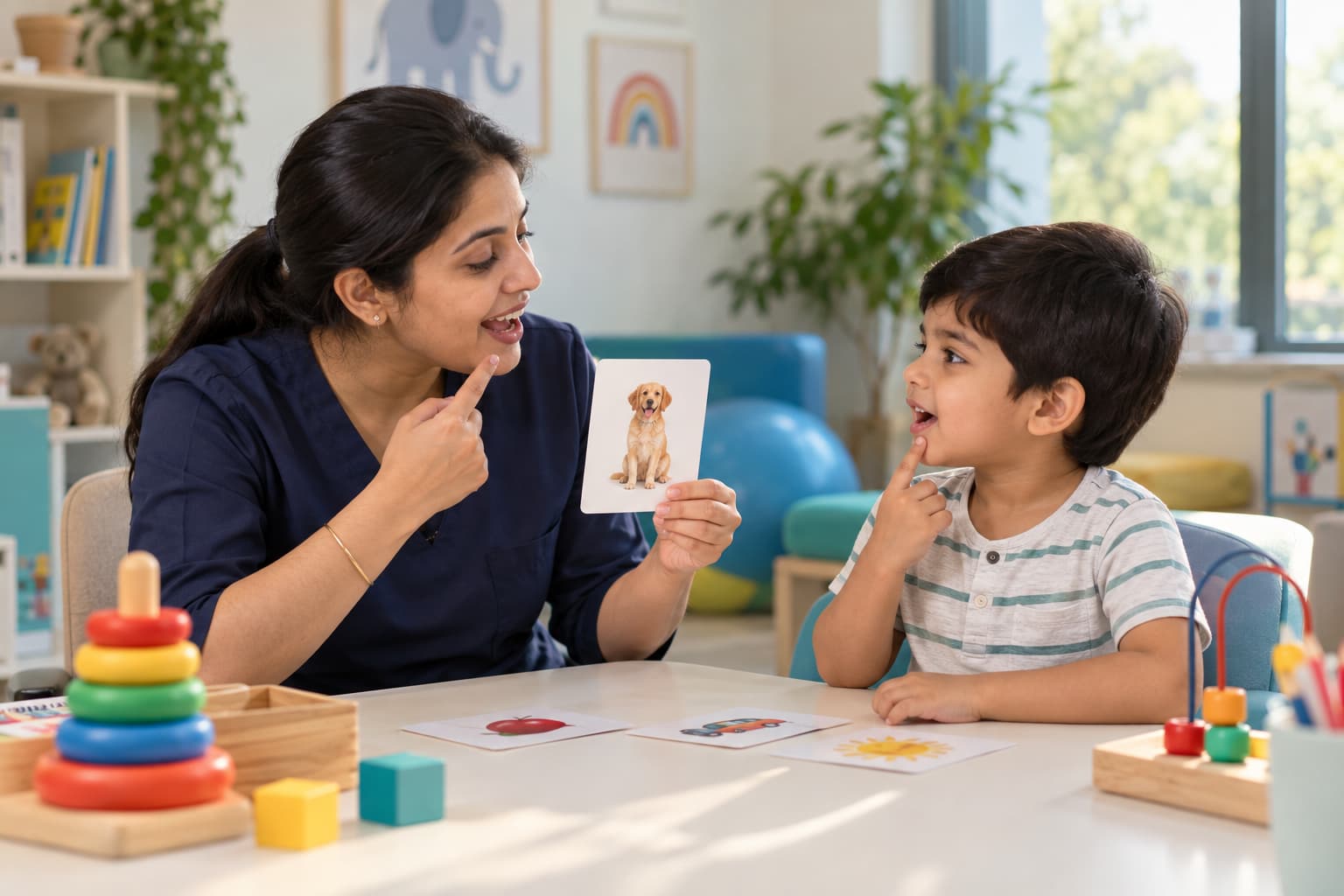
Therapy & Rehabilitation
Speech, occupational, behavioural, physical and neurological support for children and adults.
Explore TherapiesAaradhya Rising
Foundation
Loading…Therapy, development & learning in Gajraula
Aaradhya Rising Foundation brings therapy, child development, rehabilitation, early learning and family support together in one caring environment.

Explore Aaradhya
Find the right starting point for your family, from assessment-led therapy to early learning and care.
Speech, occupational, behavioural, physical and neurological support for children and adults.
Explore Therapies
Early intervention, developmental guidance and coordinated support for growing skills.
Early Intervention
A nurturing place for early learning, joyful play, social connection and daily routines.
Explore Play SchoolSpeech & Language Therapy
Being understood and sharing ideas matter at every age.
Start with the communication situation you want to make easier.
Explore the relevant assessment:
Speech clarity and everyday communication.
A child’s developing sounds, words and understanding.
Understanding information and expressing ideas.
Sounds and patterns that affect intelligibility.
Speaking participation and the experience of stuttering.
Voice concerns with appropriate medical assessment.
Speech movement planning and control.
Language changes after stroke or brain injury.
Mutual understanding, preferences and conversation.
Communication through speech, gestures, pictures or technology.
Occupational Therapy
Everyday activities are the starting point for occupational therapy.
Discuss practical concerns such as:
For a child, priorities may involve play, school materials or self-care.
For an adult, assessment connects health and the environment with meaningful daily tasks.
Autism Support
Autistic people have different strengths, communication styles and support needs.
Goals should reflect the person’s choices, comfort and family priorities.
Relevant questions may involve:
Support should improve access and participation, without cure claims or demands to hide harmless differences.
Behaviour Therapy
Behaviour support asks what a person is communicating and what in the environment may need to change.
An individual discussion can consider:
Agree useful goals, respectful procedures and clear ways to recognize distress, consent and a need to pause.
Early Intervention
You can raise a developmental concern before choosing a diagnosis.
Share what your child does successfully and what makes daily participation difficult.
An assessment may explore:
Family guidance should fit ordinary routines. Screening and diagnosis are different steps.
Sensory Support
Sensory preferences do not automatically mean a child needs treatment.
Explore how an actual routine is affected:
Ask why a proposed activity or environmental adaptation is appropriate and how comfort and participation will be reviewed.
Physiotherapy
Physiotherapy considers movement in the activities a person wants or needs to do.
Children’s movement, play and developmental needs.
Adult mobility, strength and functional activity.
Movement concerns in a relevant medical context.
An activity-specific rehabilitation question.
Support selected around assessment and personal priorities.
Ask about the appropriate professional, precautions and a meaningful daily-life goal.
Neurodevelopment
A movement approach needs a clear functional purpose.
Discussion may consider:
Ask how the proposed support relates to the person’s medical recommendations and everyday participation. No named technique guarantees a milestone.
DMI Therapy
DMI programme availability and relevant practitioner training remain unconfirmed.
Before considering a named intervention, ask about:
An enquiry does not reserve a DMI session. Movement assessment and medical suitability come first.
Feeding & Swallowing
Mealtime difficulty can involve several factors; it is not automatically a sensory concern.
Feeding participation and swallowing safety are different clinical questions.
Relevant assessment topics may include:
Do not change food textures, liquids or exercises on general website advice. Ask about the appropriate professional pathway.
Handwriting & Motor Skills
Writing support looks at comfort, legibility and access to learning.
A practical assessment may consider:
Play Therapy
Play can offer different ways to communicate, move, choose and take part.
An individual discussion may explore:
Clarify the professional role and purpose. Developmental play does not automatically establish a particular psychological therapy service.
Complementary Programmes
These complementary programme options require direct availability and suitability checks.
Ask about the actual format and facilitator.
Confirm health considerations and relevant training.
Enjoyment and choice should guide participation.
A water-based programme needs a verified facility and supervision.
No music-therapy qualification, yoga service or on-site pool is established by this list.
Special Education
Learning support should help a learner access meaningful activities and show what they know.
Practical priorities may include:
Discuss the actual programme, educator roles and review arrangements; no school placement or accreditation is promised.
Life Skills
Older learners should help choose the routines and roles that matter to them.
Activities can explore:
Support may involve adaptation and assistance as well as learning a skill. No employment placement is guaranteed.
Play School & Day Care
Early learning and day care have different purposes and enrolment arrangements.
Play school can offer opportunities for:
Day care discussions should clarify:
Confirm current suitability, supervision, care arrangements, hours and fees. A place does not automatically include clinical therapy.
Adult Therapy
Adult communication needs deserve adult goals and accessible choices.
Assessment may explore:
Communication support can include direct practice, partner strategies and other ways to share a message.
Sudden new speech or language changes need urgent medical attention rather than a routine booking.
Stroke Rehabilitation
Stroke rehabilitation follows medical care and the person’s own priorities.
Different needs may involve:
Relevant professionals explain their roles and agree practical goals. Recovery and service requirements vary.
Senior Adults
An older adult’s preferences remain central to rehabilitation decisions.
Daily-life concerns may involve:
New changes should not be dismissed as ageing alone. Ask which assessment and medical advice are appropriate.
Assessment
Start with the question you want an assessment to answer.
The relevant professional considers the concern and existing information.
Different assessment areas include:
Ask what the appointment can establish and how findings will guide the next step. Screening is not a diagnosis.
Therapy Options
The delivery format must fit the person, the goal and actual availability.
Explore the arrangements separately:
Appointments at the actual Gajraula centre.
Remote communication sessions subject to suitability and confirmation.
Selected remote guidance within professional scope.
Home visits require a separate location and availability check.
Practical support for ordinary routines, agreed with the person and family.
Care that begins with understanding the individual — and stays focused on the skills that matter in everyday life.
Ask which professional addresses each concern and how relevant recommendations can be connected with consent.
Recommendations are based on assessment and functional needs rather than using the same programme for every client.
Our services extend from early childhood intervention and school-age support to adult neurological and geriatric rehabilitation.
Families and caregivers can play an important role in carrying skills from therapy into everyday life.
Therapy focuses on skills that matter in real situations — communication, movement, learning, self-care, participation and independence.
Therapy, early learning and care have distinct purposes. Confirm the programme and support that fit your needs.
Before booking, ask who will provide your care, their relevant qualifications and registrations, and the scope of the proposed assessment or programme.
From your first conversation to ongoing review, the process is designed to be clear and unhurried.
Describe an everyday concern, strengths and relevant existing advice. You do not need to choose a diagnosis first.
When an assessment is needed, we will guide you toward the relevant professional.
Ask what the assessment shows, what it cannot establish and which practical next steps are appropriate.
If therapy is recommended, goals are selected according to the person's needs and functional priorities.
Goals can be reviewed periodically and adapted according to progress and changing needs.
Families and adults contact us for many different reasons. You may consider speaking with an appropriate professional if you have concerns about:
These signs do not by themselves provide a diagnosis. A qualified professional can help determine whether assessment or intervention is appropriate.
Answers to the questions families and clients ask us most often. Explore practical parent guides for more detailed reading.
Explore speech and language therapy, occupational and movement support, developmental and learning services, adult rehabilitation, play school and day care. Each has a different purpose. Describe your concern and confirm the relevant professional, assessment and current availability before choosing a programme.
Our centre & service areas
Aaradhya Rising Foundation's physical centre is in Gajraula. If you are travelling from another town, confirm the right assessment, appointment and exact visiting details before setting out.
Aaradhya Rising Foundation's physical centre is in Gajraula, Amroha district. Explore the existing speech therapy and child development pages, then confirm an appointment and the exact visiting details.
You do not have to know which therapy to choose before contacting us.
Tell our team what you have noticed, what you are concerned about and what you would like help with. We will guide you toward an appropriate assessment, consultation or service.
If you are looking for a speech therapy centre in Gajraula, occupational therapy, autism therapy, ABA therapy, physiotherapy, early intervention, special education, adult speech therapy, stroke rehabilitation, play school or developmental day care, Aaradhya Rising Foundation can help you understand your options. Families travelling from Amroha or nearby areas can ask about access to the Gajraula centre and confirm suitable services before planning a visit.