Vocational & Life Skills Trainingin Gajraula
Practical skills for a more independent day
Life-skills and pre-vocational support in Gajraula can help older learners explore practical routines and adult-life priorities. Goals should reflect the person's interests and choices; a programme does not guarantee employment, placement or independence without support.
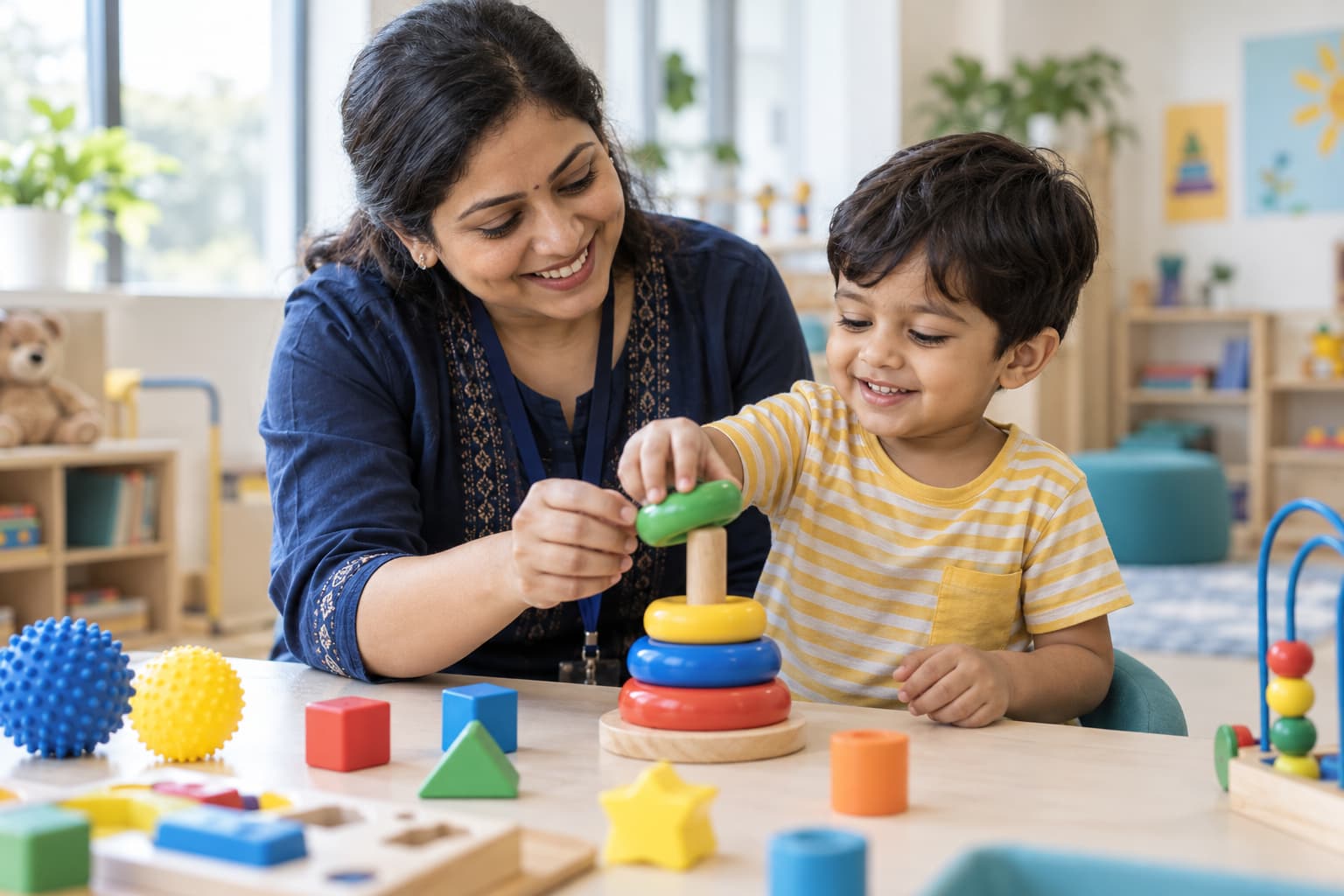
Individual goals. Everyday participation.
Understanding the support
A practical guide to Vocational & Life Skills Training
Good support begins with understanding the person: current strengths, everyday difficulties and the changes that would make a meaningful difference.
What it is
Life skills include organizing belongings, making everyday decisions, communicating needs and carrying out a meaningful sequence. Pre-vocational work explores skills relevant to a possible role or activity. Both should be age-respectful and individualized rather than a generic set of tasks chosen without the learner.
What the goal may be
Ask what the person wants to participate in and what currently creates a barrier. A goal can involve using support effectively as well as learning a task. Useful progress is connected to an ordinary setting or chosen role, not only completing a supervised exercise.
How support works
Discuss communication access, interests, current abilities and the practical demands of the proposed activity. Agree a small number of priorities and how support will be reviewed. Confirm any real community or work opportunity separately; this page does not verify employer partnerships or placement arrangements.
When to consider support
Signs an assessment may be useful
An individual assessment helps clarify the nature of a concern and the relevant next step. Consider support when a difficulty is persistent, causes distress, limits participation, or makes everyday routines harder.
You do not need a diagnosis to ask for guidance.
A conversation with the team can help you decide whether screening, a full assessment, monitoring, or simple home strategies are the right next step.
- 01Need for support with daily routines
- 02Preparing for a transition beyond school
- 03Difficulty organising or completing practical tasks
- 04Interest in pre-vocational skills and community participation
Individual priorities
Goals and questions for a useful plan
Discuss which goals matter, why an approach is proposed and how its usefulness will be reviewed in everyday life. These are planning priorities, not promised outcomes.
Build everyday independence
Agree a practical goal based on assessment, current strengths and the person's priorities.
Practise useful task routines
Use selected activities or adaptations that connect with real situations at home, school, work or in the community.
Prepare for adult participation
Review what is useful between sessions and adjust the plan as needs, abilities and routines change.
Your therapy journey
From first conversation to confident next steps
What a session may look like
A learner might practise a task sequence, organize materials or communicate a choice during a meaningful activity. Assistance can be adjusted and the person can evaluate what helps. Families should support decision-making without assuming that another person's routine or career goal is the right one.
The family's role
Choose one useful routine with the learner, such as organising belongings or following a task checklist. Discuss the assistance required and how practice can reflect the person's preferences, interests and future plans.
- 01
Share your priorities
Tell us what prompted your vocational & life skills training enquiry, the person's age and the situations where support is needed.
- 02
Meet the relevant professional
Discuss history, relevant reports and everyday needs. The professional explains the assessment or suitability review before it begins.
- 03
Agree an individual plan
Discuss priorities such as build everyday independence and practise useful task routines. Confirm the professional involved, suitable activities, proposed format and how the plan will be reviewed.
- 04
Review and adapt
Review agreed goals and discuss next steps, practical guidance or referral according to the findings and the person's response.
Individual therapy plan
Approaches may include
The team considers safety, suitability, the person's response and whether an activity is helping progress toward a meaningful goal.
- Functional skills assessment
- Task analysis and visual checklists
- Supported daily living practice
- Pre-vocational activities
- Communication for daily life
- Family transition planning
Assessment-led
Goals start with an assessment and a clear understanding of individual strengths, routines and priorities.
Coordinated care
When several needs overlap, professionals can align goals so the plan feels connected rather than fragmented.
Reviewed over time
Progress is discussed and the plan is adapted as skills develop, circumstances change, or new priorities emerge.
Common questions
Vocational & Life Skills Training FAQs
Find answers about the service, assessment and next steps. Individual recommendations follow assessment and relevant healthcare advice.
01Does the programme guarantee employment?
No. Pre-vocational work develops relevant skills and readiness. It does not guarantee a job or a placement.
02How are goals selected?
Goals reflect the learner's interests, preferences, current abilities and the practical demands of home, education or community life.
03Can goals include communicating choices at work or in the community?
Yes. Functional communication, asking for help and expressing a preference can be part of a broader practical skills plan. The learner's autonomy and priorities should guide the task and the level of support.
04How are adult-life goals chosen with the learner?
Explore what they enjoy, what they want to do and what help makes participation possible. Use an accessible way to discuss choices. Goals should be practical, age-respectful and reviewed with the person; a pre-vocational activity is not a promise of employment.
Continue exploring
Related therapy services
Special School
Specialized educational programs tailored for children with unique learning needs and developmental challenges.
Explore serviceOccupational Therapy
Helping children develop fine motor skills, sensory processing, and daily living activities for greater independence.
Explore serviceSocial & Pragmatic Communication Therapy
Support in Gajraula for navigating conversations, sharing meaning and participating in social situations in ways that respect individual communication styles.
Explore serviceNot sure whether Vocational & Life Skills Training is the right fit?
Share what you are noticing. Our team can help identify the appropriate professional, assessment and next step for you or your family.
Information on this page is educational and does not replace individual medical or developmental advice. Check service areas and plan a Gajraula centre visit. Further reading: UNESCO: inclusion in education. These resources explain general concepts and do not verify Aaradhya's professionals or programme availability.