Social & Pragmatic Communication Therapyin Gajraula
Communication that supports connection and choice
Social communication support in Gajraula considers how people share meaning, understand messages and express preferences across settings. Goals should respect individual communication styles rather than demand a single way of behaving socially.
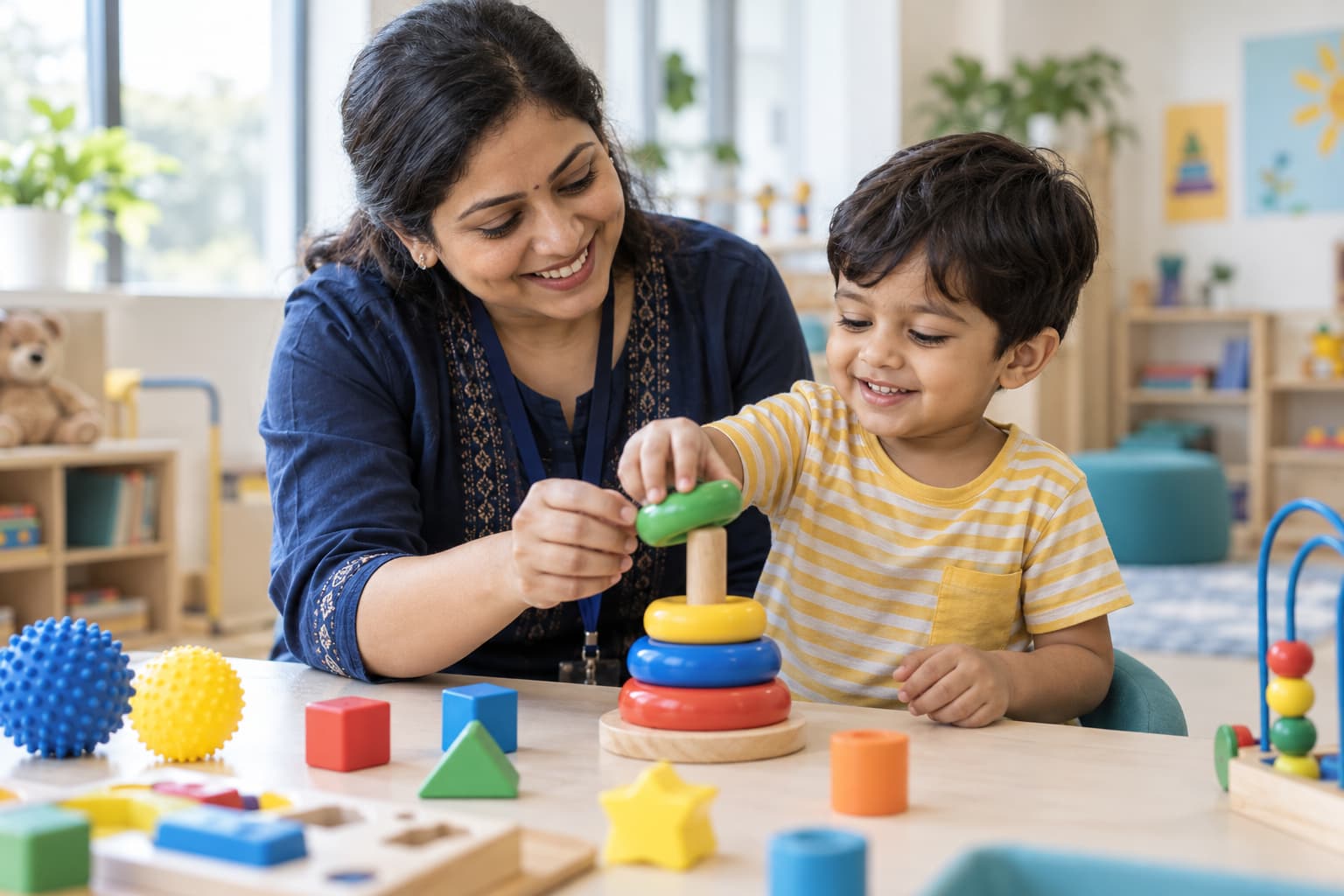
Individual goals. Everyday participation.
Understanding the support
A practical guide to Social & Pragmatic Communication Therapy
Good support begins with understanding the person: current strengths, everyday difficulties and the changes that would make a meaningful difference.
What it is
Social communication includes taking part in a conversation, understanding context, asking for clarification and expressing boundaries. A difficulty can arise between a person's communication style and the demands of an environment. Assessment should consider both, including whether other people can make their messages clearer.
What the goal may be
The person may want to join a group activity, explain confusion, maintain a friendship or ask for a break. Their own purpose matters more than performing eye contact or a rehearsed response simply to appear typical.
How support works
A professional explores real examples across home, school or work, with appropriate consent. Goals may address mutual understanding, communication repair and access to participation. Discuss which environmental changes or communication-partner strategies are needed alongside any individual work.
When to consider support
Signs an assessment may be useful
An individual assessment helps clarify the nature of a concern and the relevant next step. Consider support when a difficulty is persistent, causes distress, limits participation, or makes everyday routines harder.
You do not need a diagnosis to ask for guidance.
A conversation with the team can help you decide whether screening, a full assessment, monitoring, or simple home strategies are the right next step.
- 01Difficulty joining conversations or shared activities
- 02Misunderstandings affecting school, work or relationships
- 03Difficulty asking for help or clarification
- 04A wish for support with specific social communication situations
Individual priorities
Goals and questions for a useful plan
Discuss which goals matter, why an approach is proposed and how its usefulness will be reviewed in everyday life. These are planning priorities, not promised outcomes.
Express needs and boundaries
Agree a practical goal based on assessment, current strengths and the person's priorities.
Navigate meaningful conversations
Use selected activities or adaptations that connect with real situations at home, school, work or in the community.
Build supportive communication environments
Review what is useful between sessions and adjust the plan as needs, abilities and routines change.
Your therapy journey
From first conversation to confident next steps
What a session may look like
A session might review an unclear message, practise asking a question or explore how to communicate a preference in an actual situation. The professional invites feedback about comfort and usefulness. Home support should create room for authentic communication rather than rewarding a performance that masks distress.
The family's role
Ask the person which interactions they want to navigate and what support would feel useful. Successful communication depends on partners and environments adapting too, rather than requiring one person to change every preference.
- 01
Share your priorities
Tell us what prompted your social & pragmatic communication therapy enquiry, the person's age and the situations where support is needed.
- 02
Meet the relevant professional
Discuss history, relevant reports and everyday needs. The professional explains the assessment or suitability review before it begins.
- 03
Agree an individual plan
Discuss priorities such as express needs and boundaries and navigate meaningful conversations. Confirm the professional involved, suitable activities, proposed format and how the plan will be reviewed.
- 04
Review and adapt
Review agreed goals and discuss next steps, practical guidance or referral according to the findings and the person's response.
Individual therapy plan
Approaches may include
The team considers safety, suitability, the person's response and whether an activity is helping progress toward a meaningful goal.
- Conversation-based assessment
- Shared play or real-life scenarios
- Clarification and repair strategies
- Visual communication supports
- Communication partner guidance
- School or workplace collaboration
Assessment-led
Goals start with an assessment and a clear understanding of individual strengths, routines and priorities.
Coordinated care
When several needs overlap, professionals can align goals so the plan feels connected rather than fragmented.
Reviewed over time
Progress is discussed and the plan is adapted as skills develop, circumstances change, or new priorities emerge.
Common questions
Social & Pragmatic Communication Therapy FAQs
Find answers about the service, assessment and next steps. Individual recommendations follow assessment and relevant healthcare advice.
01Does support require eye contact?
Goals should respect comfort, autonomy and different communication styles. Eye contact is not a prerequisite for meaningful communication.
02Are goals the same for every person?
No. Goals should reflect the person's preferences, age, communication methods and the situations they want to navigate.
03Can asking for clarification be a useful goal?
Yes. A person may want a way to ask someone to explain, slow down or rephrase a message. Goals should reflect real situations and the communication methods the individual prefers.
04Must social communication therapy teach eye contact?
Not as an automatic goal. Useful goals should support the person's communication, choices and participation. Ask why a proposed activity matters to them and whether a different communication method or environmental adaptation would serve the same purpose more comfortably.
Continue exploring
Related therapy services
Autism Therapy
Individualised support for communication, sensory regulation, behaviour, social participation, and everyday independence.
Explore serviceLanguage Development Therapy
Individual language support in Gajraula for understanding instructions, building vocabulary, forming sentences and taking part in conversations.
Explore serviceAAC & Alternative Communication
Augmentative and alternative communication support in Gajraula using gestures, pictures, writing or communication technology to support everyday expression.
Explore serviceNot sure whether Social & Pragmatic Communication Therapy is the right fit?
Share what you are noticing. Our team can help identify the appropriate professional, assessment and next step for you or your family.
Information on this page is educational and does not replace individual medical or developmental advice. Check service areas and plan a Gajraula centre visit. Further reading: ASHA: social communication. These resources explain general concepts and do not verify Aaradhya's professionals or programme availability.