Language Development Therapyin Gajraula
From understanding words to sharing ideas
Language support in Gajraula explores how a child understands information and expresses ideas. Clear speech sounds do not necessarily mean that following instructions, finding words or telling a story is easy.
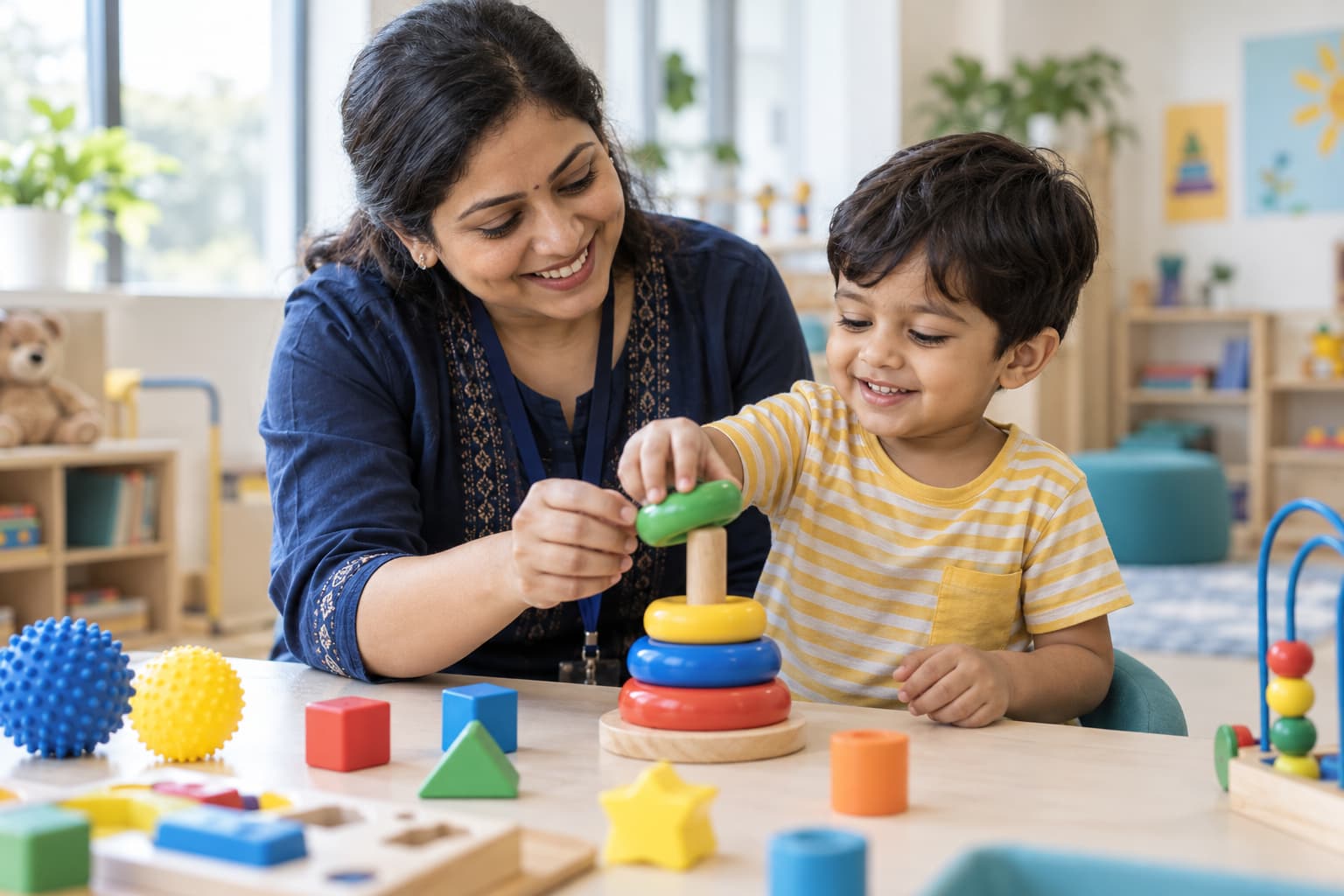
Individual goals. Everyday participation.
Understanding the support
A practical guide to Language Development Therapy
Good support begins with understanding your child: what is already working, what feels difficult and which everyday changes matter most to your family.
What it is
Receptive language means understanding messages; expressive language means sharing meaning. A child might understand familiar routines but find a new instruction difficult, or know an answer but struggle to organize it into a sentence. Assessment considers the languages and situations the child actually uses rather than judging ability from one unfamiliar task.
What the goal may be
Language needs can affect learning, friendships and explaining what happened. Identify a practical priority, such as understanding classroom instructions or describing a problem, so support is connected to participation rather than a list of vocabulary alone.
How support works
A professional discusses development, hearing, school demands and communication at home, then selects suitable observation or assessment activities. Shared reading, picture sequences or conversation can show how the child understands and organizes language. Recommendations should explain which skill is being addressed and how to review it across settings.
When to consider support
Signs an assessment may be useful
Children develop at different rates, and one sign by itself does not identify a condition. Consider support when a difficulty is persistent, causes distress, limits participation, or makes everyday routines harder.
You do not need a diagnosis to ask for guidance.
A conversation with the team can help you decide whether screening, a full assessment, monitoring, or simple home strategies are the right next step.
- 01Difficulty understanding everyday instructions
- 02Limited vocabulary or short sentences
- 03Trouble explaining events or retelling a story
- 04Difficulty following classroom discussion
Individual priorities
Goals and questions for a useful plan
Discuss which goals matter, why an approach is proposed and how its usefulness will be reviewed in everyday life. These are planning priorities, not promised outcomes.
Understand everyday language
Agree a practical goal based on assessment, current strengths and the person's priorities.
Express ideas more clearly
Use selected activities or adaptations that connect with real situations at home, school, work or in the community.
Participate in learning and conversation
Review what is useful between sessions and adjust the plan as needs, abilities and routines change.
Your therapy journey
From first conversation to confident next steps
What a session may look like
A therapist might simplify an instruction, model a useful sentence during pretend play or help a child arrange a short story in order. Caregivers can practise an agreed strategy in an ordinary activity, allow time to respond and share whether it makes understanding or expression easier.
The family's role
Use a familiar book, activity or conversation to notice what your child understands and wants to express. Ask the clinician how to adjust the amount of language and model a useful word or sentence.
- 01
Share your priorities
Tell us what prompted your language development therapy enquiry, the person's age and the situations where support is needed.
- 02
Meet the relevant professional
Discuss history, relevant reports and everyday needs. The professional explains the assessment or suitability review before it begins.
- 03
Agree an individual plan
Discuss priorities such as understand everyday language and express ideas more clearly. Confirm the professional involved, suitable activities, proposed format and how the plan will be reviewed.
- 04
Review and adapt
Review agreed goals and discuss next steps, practical guidance or referral according to the findings and the person's response.
Individual therapy plan
Approaches may include
The team considers safety, suitability, the person's response and whether an activity is helping progress toward a meaningful goal.
- Vocabulary in meaningful contexts
- Sentence modelling
- Storytelling and sequencing
- Visual support for instructions
- Shared reading
- Home and school collaboration
Assessment-led
Goals start with an assessment and a clear understanding of individual strengths, routines and priorities.
Coordinated care
When several needs overlap, professionals can align goals so the plan feels connected rather than fragmented.
Reviewed over time
Progress is discussed and the plan is adapted as skills develop, circumstances change, or new priorities emerge.
Common questions
Language Development Therapy FAQs
Find answers about the service, assessment and next steps. Individual recommendations follow assessment and relevant healthcare advice.
01How is language different from speech?
Speech concerns how sounds are produced. Language concerns understanding and expressing meaning through words, sentences or other communication methods. Assessment looks at both when needed.
02Can we use our home language?
Share all languages your child hears and uses. Goals and family guidance should respect your household's languages rather than asking you to abandon them.
03Can a child pronounce words clearly and still need language support?
Yes. Clear speech sounds do not show how easily someone understands instructions, organises a sentence or shares an idea. An assessment can explore language separately from the clarity of pronunciation.
04Can a child need language support when pronunciation is clear?
Yes. Producing sounds clearly and understanding or organizing language are different abilities. Share examples such as difficulty following a message, finding a word or explaining an event. Assessment considers the child's languages, hearing history and everyday communication before a recommendation is made.
Continue exploring
Related therapy services
Speech Delay Therapy
Speech delay support in Gajraula for children who need help developing sounds, words or meaningful communication in daily routines.
Explore serviceSocial & Pragmatic Communication Therapy
Support in Gajraula for navigating conversations, sharing meaning and participating in social situations in ways that respect individual communication styles.
Explore serviceSpecial School
Specialized educational programs tailored for children with unique learning needs and developmental challenges.
Explore serviceNot sure whether Language Development Therapy is the right fit?
Share what you are noticing. Our team can help identify the appropriate professional, assessment and next step for you or your family.
Information on this page is educational and does not replace individual medical or developmental advice. Check service areas and plan a Gajraula centre visit. Further reading: ASHA: speech and language concerns; NIDCD: speech and language development. These resources explain general concepts and do not verify Aaradhya's professionals or programme availability.