Play school activities.
Our activity-rich environment gives young children many ways to explore ideas, use their bodies, express themselves and enjoy learning with others.
Every activity has room for curiosity and choice
Nurturing educators
Warm relationships help children feel secure enough to explore.
Learning through play
Thoughtfully planned play turns curiosity into meaningful learning.
Whole-child development
Communication, movement, thinking, creativity and independence grow together.
More ways to grow
Explore our play school
Move between the overview, educational approach, programme information and everyday activities.
Curiosity becomes capability through practice.
More than busy play
Activities with a meaningful why
A simple activity can involve language, planning, coordination, imagination and cooperation all at once. Educators focus on the learning process—not on producing identical results.
Imagine
Pretend and open-ended play invite original ideas.
Explore
Children learn about materials through safe sensory experiences.
Coordinate
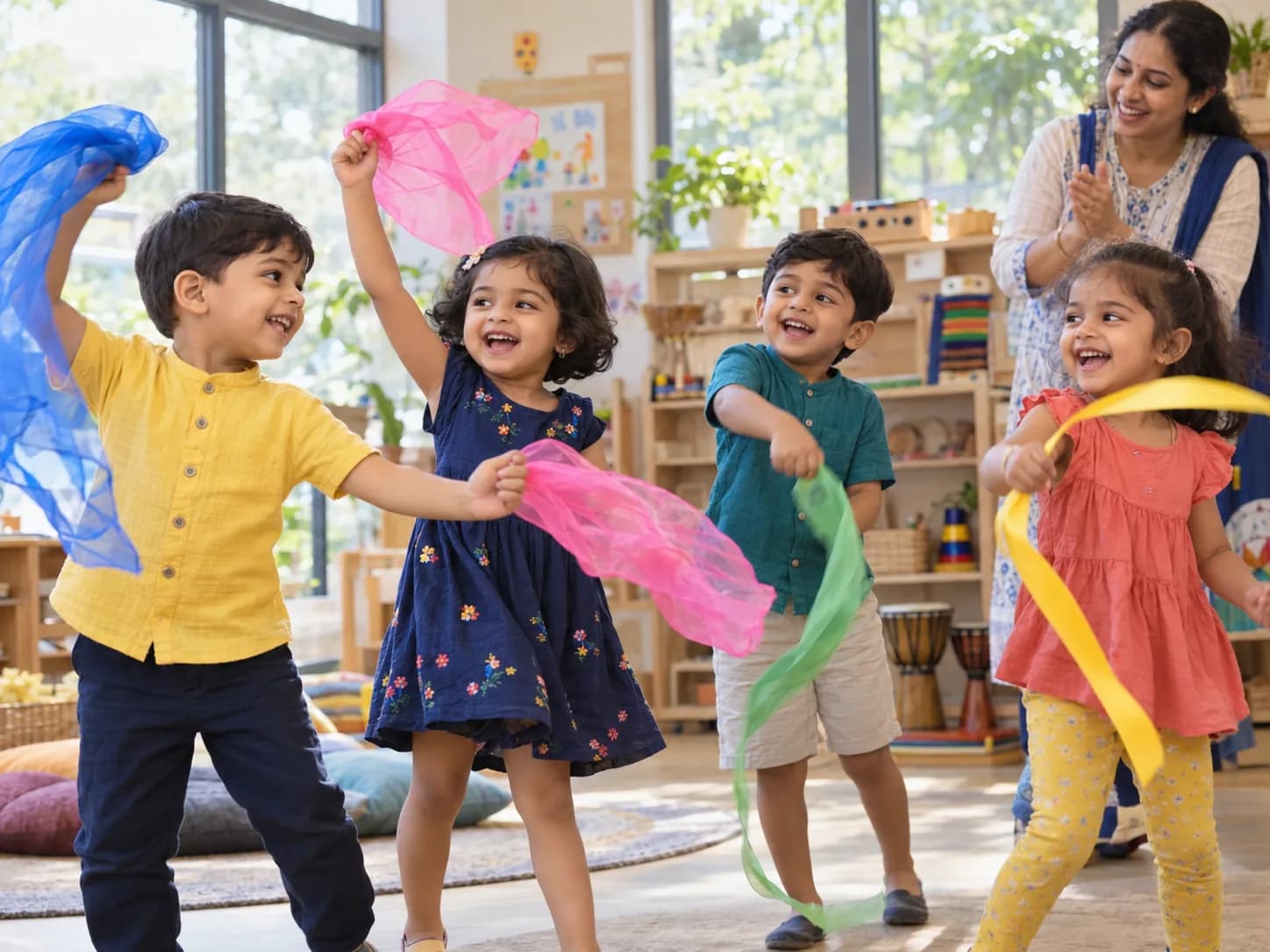
Action games strengthen control, timing and body awareness.
Collaborate
Shared projects create natural reasons to communicate.
Activity experiences
Many ways to learn and participate
Activities are adapted to the group's interests, the learning intention and what is appropriate in the moment.
Art & making
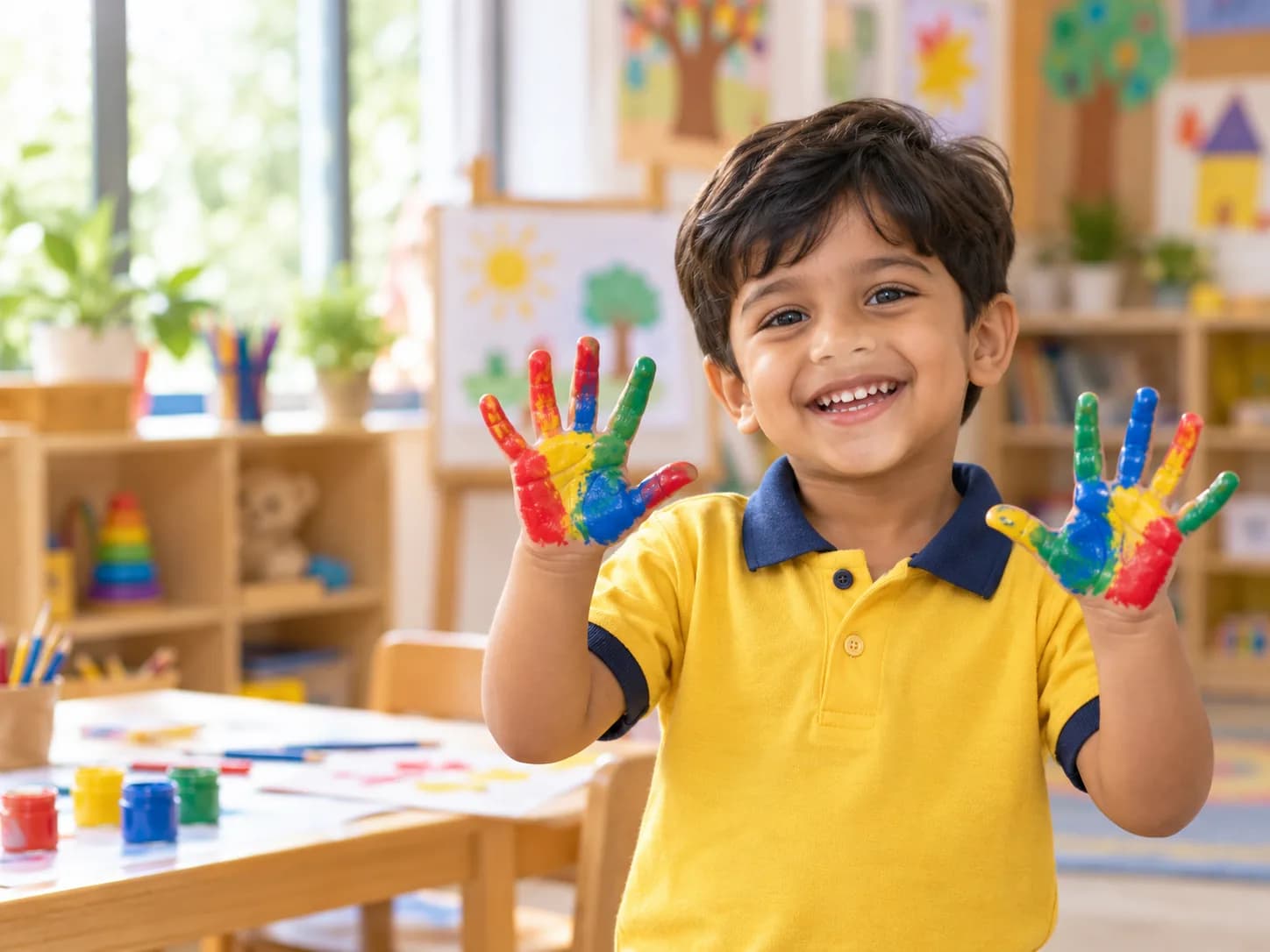
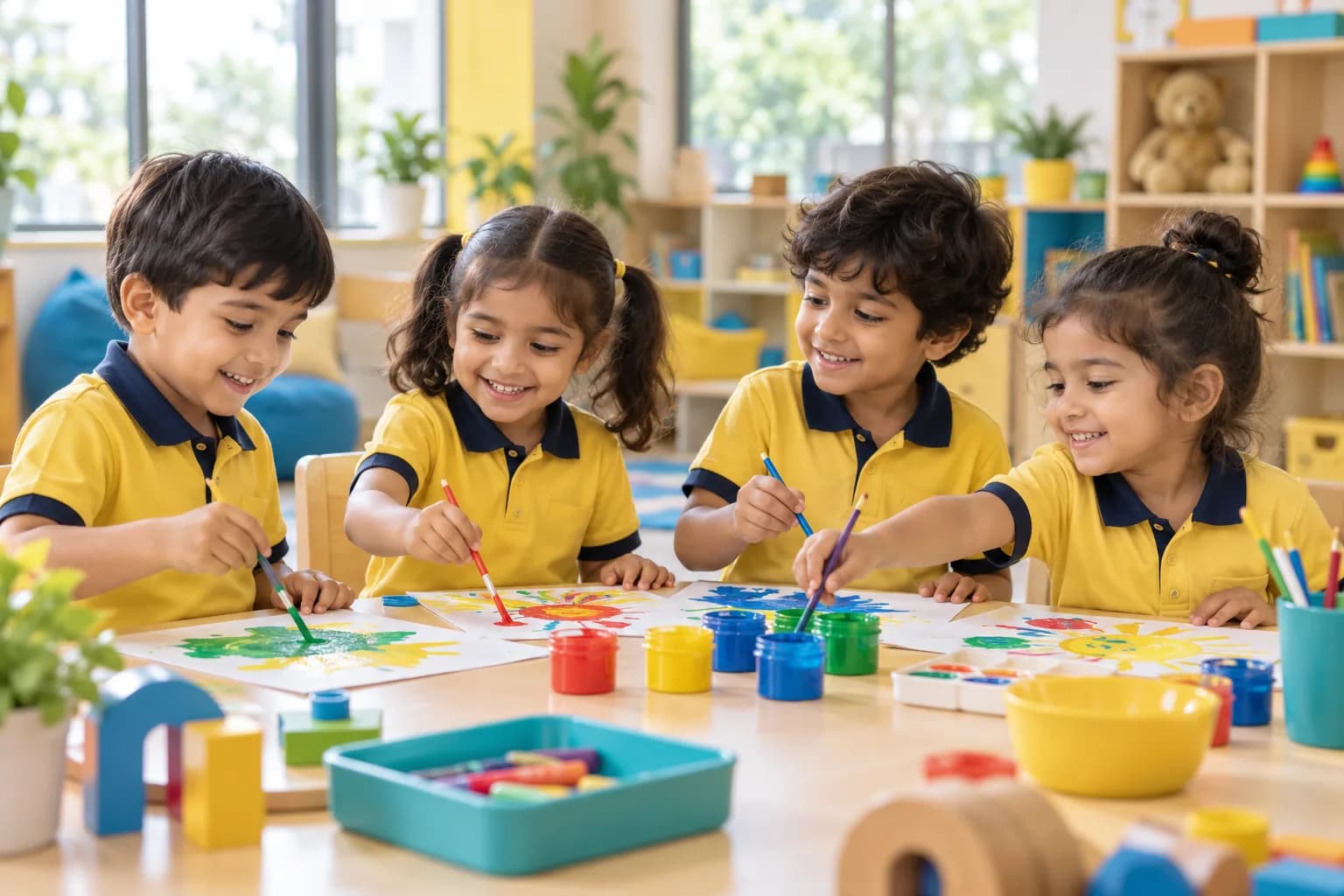
Paint, collage, clay and loose parts encourage experimentation, planning and fine-motor control.
Music & rhythm
Songs, instruments, action rhymes and rhythm games support listening, memory and expression.
Stories & pretend play
Books, puppets and role play help children explore language, feelings and different perspectives.
Movement & outdoor play
Balancing, climbing, dancing and active games support coordination and confident movement.
Sensory discovery
Age-appropriate textures, sounds, water and natural materials invite focused exploration.
Nature & simple science
Observing plants, weather, colour and change builds questions and early scientific thinking.
Let an activity invite curiosity and choice
Stories, art, construction and movement offer different ways to join. The examples here explain learning opportunities; check which materials, spaces and activities are actually available in the current programme.
A creative activity can stay open-ended
Children may choose a material, change an idea or describe what they made. Ask how adults support exploration without requiring an identical result. Share sensitivities or access needs so suitable materials can be discussed. A photograph illustrates the activity type; it does not confirm a specific resource or current session.
A shared game can welcome different responses
Taking a turn may involve offering an object, moving, pointing or speaking. A child who watches first may still be learning about the game. Discuss how the team explains the activity and offers choice, rather than treating quick compliance or eye contact as the measure of successful participation.
Movement needs an appropriate setting
Ask what movement options and supervision are available, and share relevant mobility or medical recommendations before participation. An enjoyable group game is different from individualized physiotherapy. The activity should be selected for the child and setting, not copied from a demonstration that assumes particular equipment or assistance.
Carry an idea into ordinary home play
A familiar song, a book or arranging everyday objects can give a family something to enjoy together. Follow the child's interests and allow time to respond. You do not need to reproduce every classroom activity or turn play into an assessment. Ask for individual guidance if a developmental concern persists.
Questions before choosing this programme
Are all pictured activities offered every day?
No daily activity or equipment list is verified by the images. Ask about the current programme, materials and setting. Examples explain possible learning experiences rather than a fixed timetable.
Can a child observe before joining?
Discuss how choice, familiarization and breaks are handled in the actual programme. Children may participate in different ways. Ask what adaptations and assistance can be offered for your child.
Is an activity session the same as a developmental assessment?
No. A learning activity may provide useful observations but does not establish a diagnosis. Explain any concern and ask about an appropriate professional assessment separately.
How can I use an activity idea at home?
Choose something comfortable and familiar, follow the child's interest and avoid pressuring a particular response. For a specific therapy goal or an activity involving health or access concerns, ask the relevant professional for individualized guidance.
The activity cycle
What children practise while they play
Predictable progression helps children feel confident while keeping each experience active and engaging.
- 1
Notice
Children attend to materials, possibilities, people and patterns around them.
- 2
Choose
Making a plan or selecting a resource gives the child an active role.
- 3
Try
Experimentation builds coordination, persistence and flexible problem-solving.
- 4
Share
Conversation, display, demonstration or reflection helps make learning visible.
Individual expression
Children can approach a creative idea in different ways without one model answer.
Safe participation
Materials and experiences are selected and supervised with young learners in mind.
Repeatable favourites
Returning to an activity helps children refine ideas and notice new possibilities.
Adaptable experiences
Instructions, tools or ways of joining can be adjusted so more children can participate meaningfully.
Helpful answers
Frequently asked questions
Still deciding? We are happy to explain the current programme and help you prepare useful questions for a centre visit.
Activities may include stories, songs, art, pretend play, construction, sensory exploration, movement, outdoor play, early concept games and practical routines. Plans can change with the group and the current programme.
A warm first step
Come see how joyful, purposeful learning can feel.
Contact Aaradhya Rising Foundation in Gajraula to discuss the current play school programme, availability and your child's needs.